
Manual Driving or Automatic? What Every Young Learner Should Consider Before Booking a Single Lesson
Before you even book your first driving lesson, there is one decision waiting for you that feels a lot bigger than it probably should. Manual or automatic? For a lot of young drivers in the UK, this is the first real fork in the road. And honestly, most people make the choice based on what their mates are doing or what their parents learnt on, rather than what actually makes sense for them.
So let us talk about it properly.
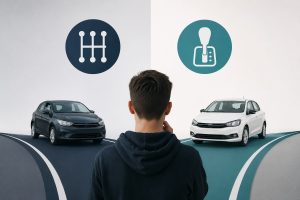
What Manual Driving Actually Involves
Manual driving gives you full control of the vehicle. You are working with the clutch, changing gears, managing the biting point, and coordinating all of that with steering, braking, and road awareness at the same time. For some learners, this level of control feels empowering. For others, it feels like trying to rub your stomach and pat your head while someone honks behind you at a roundabout.
A structured manual driving test practice course is designed to bring all of those elements together gradually so they start to feel natural over time. The key word there is gradually. Rushing the manual learning process tends to create the kind of habits that show up badly on test day.
Why Automatic Has Become So Popular With Young Learners
The rise of automatic cars in the UK has changed the way a lot of young people think about learning. If you plan to drive an automatic long-term, or if you want to pass as smoothly and stress-free as possible, the automatic route makes a genuinely strong case for itself.
It removes one major layer of coordination and lets you focus entirely on the road. Junctions feel less overwhelming. Hill starts become dramatically less stressful. And your brain has more bandwidth for the stuff that actually matters most on the test.
The Licence Difference Worth Knowing
One thing every learner should understand before making this choice. If you pass your test in an automatic, your licence restricts you to automatic vehicles only. Pass in a manual and you can drive both. For some young people, that flexibility matters a lot. For others, it really does not.
Think about what your actual driving life is going to look like and make the decision based on that reality, not based on what feels more impressive.
Starting as a Beginner Means the Right Course Matters
Regardless of which transmission type you choose, the foundation of your learning matters enormously. A proper driving course for beginners in the UK is built around real learner needs. It does not assume anything. It starts from the basics and builds up in a way that actually sticks.
That kind of structured foundation is what separates learners who pass with confidence from learners who technically pass but still feel shaky every time they get in the car.
The Right Choice Is the One That Works for You
There is no universally correct answer here. Manual and automatic both have real advantages depending on who you are and what you need. What matters most is not which one sounds better on paper. It is the one which sets you up to actually enjoy driving and to do it safely for the rest of your life.
Start with that question, and the choice becomes a lot clearer.
Leave a Reply