
Your Event Ended at 9 PM. For Thousands of People Online, It Was Just Getting Started
Picture this. A conference wraps up after a full day of sessions, panels, and keynote speakers. The chairs get stacked. The venue team starts breaking things down. People shuffle out to the parking lot, tired but energized. And somewhere across the world, a group of attendees who never stepped foot in the building are still in the chat, still talking, still pulling up the recording of the final session because they want to watch it again. That is the new reality of events. And once you see it, you cannot unsee it.
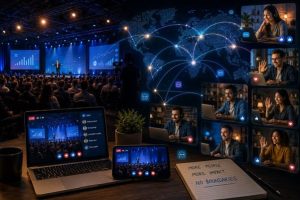
The audience is no longer defined by the walls of the room.
The Old Model Had a Built-In Cap
For decades, event success was measured by seats filled. You had a venue, it had a capacity, and your goal was to hit it. The mental model was almost entirely physical. But that model carried a quiet flaw. It assumed the only people worth reaching were the ones who could travel, book hotels, take time off work, and physically appear. Everyone else was simply not part of the conversation. That exclusion was never intentional. It was just the cost of operating within a physical-only framework. Event livestreaming services have directly challenged that assumption, and the results have forced a lot of organizers to rethink everything they thought they knew about audience size and event impact.
What Happens When You Open the Digital Door
The numbers shift fast once you remove the physical attendance requirement. Events that drew a few hundred in-person attendees suddenly find themselves reaching thousands of engaged participants online. And these are not passive viewers scrolling through a feed. When done well, the online experience is interactive, immersive, and emotionally present. People ask questions. They respond to polls. They share sessions in real time. They form connections with other attendees they have never met. The digital room can be more active than the physical one on the right day. Live event streaming done with genuine production care does not feel like a consolation prize for people who could not attend. It feels like its own distinct and valuable experience.
Why Hybrid Is Not Just a Trend
The hesitation some organizers still feel toward online audiences is understandable. There is a fear that virtual attendees dilute the energy of the room or that the in-person experience becomes less special somehow. That fear does not hold up against the actual data or the actual experience of the people involved. Hybrid events consistently report that in-person attendance either holds steady or improves when digital access is offered alongside it. The two formats feed each other. People who watch online come in person the next year. People who attend in person recommend the digital option to colleagues who could not get away.
The Event You Build Is Larger Than You Think
Here is the mindset shift that changes everything. Your event is not the room you rent. Your event is the conversation you start and how long it keeps going after the chairs are stacked. The room fills up and empties out. The conversation, if it is worth having, does not stop at the exit door. Building for both audiences, the one in the seats and the one behind a screen, is not extra work. It is smarter work. And it is what the best events in every industry are doing right now
Recent Post



Leave a Reply