
The Hidden Costs of a Traditional Document Management System
Traditional document management typically relies on physical paper-based processes. It has long been the norm for organizations. With the rise of digitization, many modern businesses now use digital solutions, but some still use outdated techniques of document management. Though it first appears to be cost-effective, the traditional system has hidden costs that can harm your business productivity and efficiency.
It can be said that effective document management of all sizes is crucial in the fast-paced digital environment. Due to the paper-based processes being familiar and ingrained in organizational culture, the hidden costs of traditional document management often remain underestimated or unnoticed. Here are the challenges you can face with traditional filing.
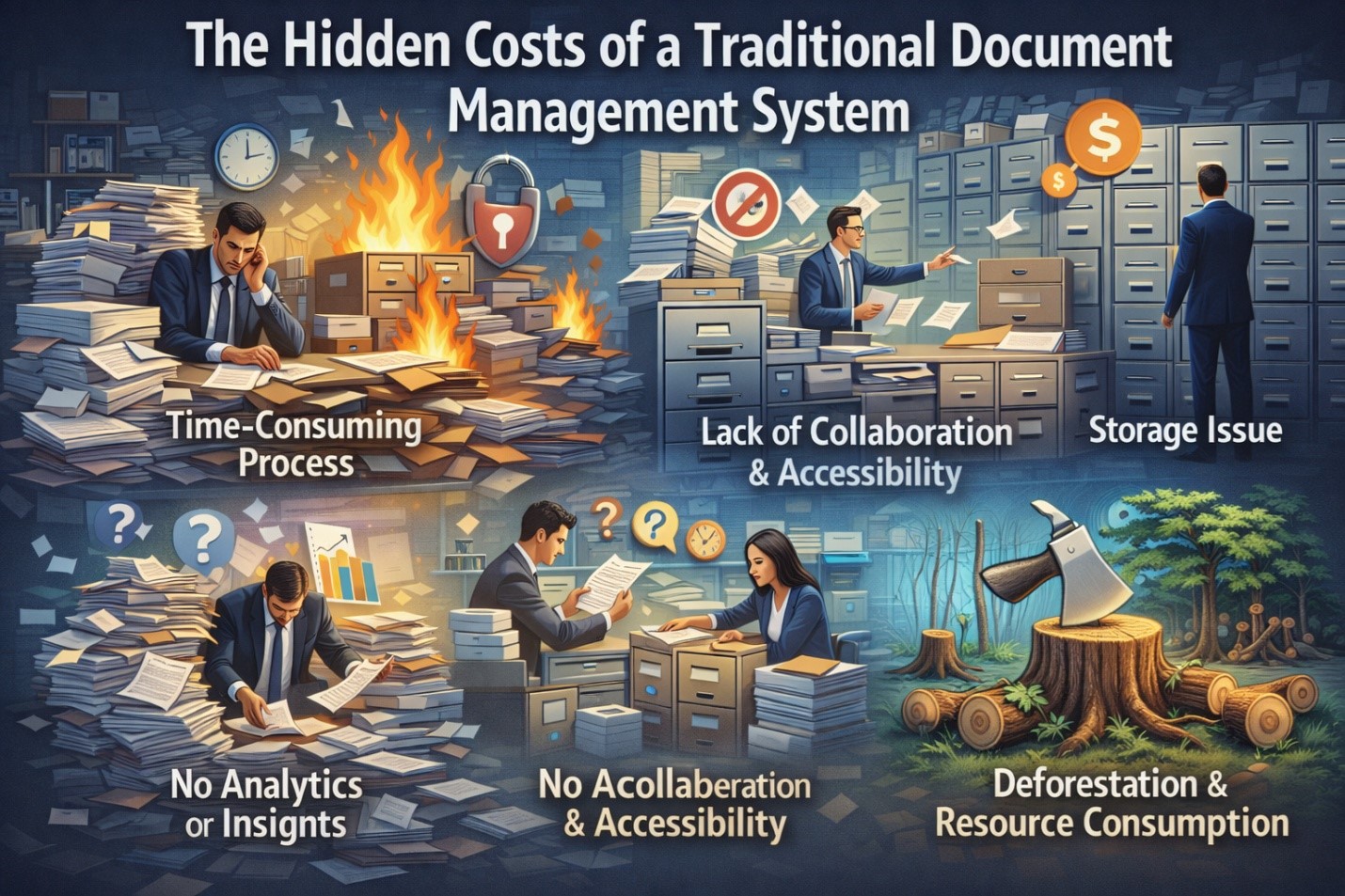
Challenges Faced by Business Owners with Traditional Filing
Here you go!
Time-Consuming Process
The manual handling and processing of physical documents significantly slow down business workflows. It disrupts timely decision-making and hinders overall productivity. Your employees need to spend their valuable time searching for and organizing documents instead of focusing on strategic tasks. Implementing an open source document management system can streamline these processes and automate indexing. This approach can significantly reduce the time spent on routine administrative tasks.
Risk of Loss and Damage
Physical documents are likely to be lost, damaged, stolen, or destroyed because of natural disasters, accidents, or mishandling. Reproducing or recovering those lost documents can result in significant financial losses and operational disruptions. The loss of confidential or sensitive documents can have severe legal and reputational consequences.
Lack of Collaboration and Accessibility
Sharing and collaborating on physical documents is unmanageable, particularly in distributed and remote work environments. It hampers team collaboration, slows down the timelines of your business project, and reduces overall efficiency. Digital or cloud-based document systems enable simultaneous access from anywhere. It enhances productivity while maintaining strict access control.
Storage Issue
Traditional document management requires dedicated physical space for filing shelves, cabinets, and other storage facilities. It results in additional costs for the office and limits workspace optimization. Your valuable commercial square footage is consumed by rows of cabinets instead of being utilized for revenue-generating activities. A document management system with barcode recognition can digitize those files and allow easy retrieval without any physical clutter. In addition, barcode scanning accelerates the process while saving space and improving organization.
Lack of Analytics and Insights
When your team is going to extract meaningful insights and analytics from the physical documents, it seems time-consuming and arduous. It limits the ability of your organization to make data-driven decisions and also hampers process optimization. No doubt, valuable business intelligence remains hidden within stacks of paper, preventing your team from gaining a competitive edge.
Deforestation and Resource Consumption
The production of paper from trees contributes to deforestation. This unsustainable practice leads to habitat destruction, loss of biodiversity, and negative impacts on ecosystems. On the other hand, digital filing reduces paper use, lowers operational costs, and supports sustainability initiatives.
By adopting modern document management solutions, your business organization not only mitigates the hidden costs and inefficiencies but also contributes to environmental sustainability, improved productivity, and enhanced compliance. It unlocks the full potential of the information assets.
Recent Post



Leave a Reply